
Frost buildup · 7 min read
Frost Buildup on 15-to-20-Year-Old Sub-Zero Built-Ins in Sunnyvale
Frost on your Sunnyvale Sub-Zero freezer wall? Learn when it signals a defrost heater, thermostat, or drain fault versus a tired door gasket.
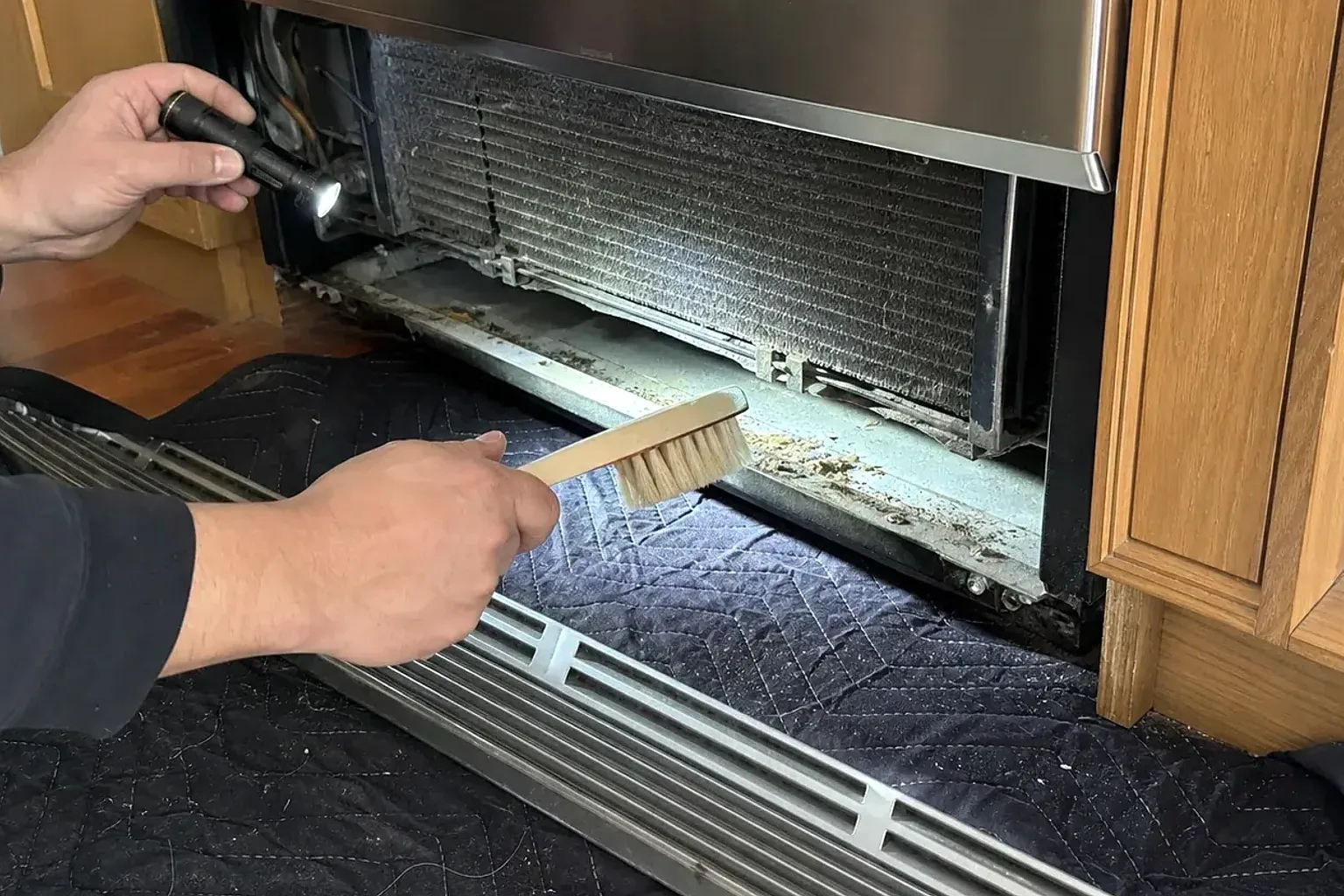
Across a typical Sunnyvale summer, the three to four months when evening humidity climbs, frost on the back wall of a 15- to 20-year-old Sub-Zero freezer is the single most common call we log. A healthy built-in runs its automatic defrost cycle every 8 to 12 hours and should never hold visible ice, so when a sheet of frost returns within a day of you scraping it off, the defrost system rather than the weather is usually the real fault. The good news for Sunnyvale owners is that a returning frost sheet narrows to a short list of parts, and the diagnostic that pinpoints which one runs $145 to $225 with that fee credited toward the repair. Built-ins in this age band were engineered to last decades, so the frost you are seeing rarely means the appliance is finished; far more often a single worn part in the defrost circuit has quietly failed while everything else keeps running. This guide walks through why the frost keeps coming back, how the automatic defrost cycle is supposed to work, how to tell a defrost fault from a leaky door gasket, and what each repair path costs so you can call with a clear picture of what your unit likely needs.
Why Does Frost Keep Coming Back on the Freezer Wall?
Frost that reappears on the back wall of a Sub-Zero freezer points to one of three failing parts inside the defrost system: the defrost heater, the defrost thermostat, or a blocked drain line. A Sub-Zero defrost heater is meant to melt the thin layer of frost that forms on the evaporator coil during each cooling stretch; once that heater burns out, the coil ices over, airflow chokes, and frost pushes forward onto the visible wall and drawers. The defrost thermostat tells the system the coil is warm enough to stop heating, and a stuck thermostat leaves the heater cold so ice never clears. A plugged defrost drain, common on Sunnyvale built-ins that are 15 to 20 years old, lets meltwater refreeze at the bottom of the freezer instead of running to the evaporator pan. Each of these three faults produces the same symptom you actually see at the drawers, which is exactly why a returning frost sheet needs a real diagnostic rather than another round of scraping. Scraping the ice away feels like progress, but it only resets the clock on a coil that will re-freeze within a day because the underlying part is still dead. Compounding matters, a coil buried in ice also blocks the fan that moves cold air between the freezer and the fresh-food side, so a defrost fault that starts as a cosmetic frost sheet can end with warm milk in the refrigerator compartment days later. That progression is why we treat repeat frost on an older Sunnyvale built-in as an early warning rather than a nuisance.
How Does the Automatic Defrost Cycle Actually Work?
A Sub-Zero built-in runs an automatic defrost cycle roughly every 8 to 12 hours, and understanding that rhythm explains why healthy units stay clear of ice. During normal cooling, the evaporator coil sits well below freezing and pulls moisture out of the air as thin frost; on schedule, the control board cuts the compressor, energizes the heater for several minutes, and warms the coil just past 32 degrees so accumulated frost melts and drains away. Meltwater flows down the drain into a pan near the compressor, where ambient heat evaporates it harmlessly. Once the coil clears, the thermostat opens, the heater shuts off, and cooling resumes before the freezer compartment loses more than a couple of degrees. When any link in that chain breaks, whether heater, thermostat, drain, or the sensor that times the interval, frost stops clearing and starts building visit after visit until the compartment airflow is choked and your food starts to warm. Older Sub-Zero built-ins in the 15- to 20-year range lean on a mechanical defrost thermostat and a resistive heater that both wear with every one of the thousands of cycles they have run, so it is normal for one of them to age out long before the compressor or sealed system ever does. Knowing the cycle should complete quietly in the background also tells you what to listen for: a faint tick as the compressor stops, a brief pause in the fan, then cooling resuming. When those beats fall out of sequence and frost climbs anyway, the timing side of the system is the place a technician looks first.
Is Your Frost a Defrost Fault or Just a Tired Door Gasket?
Telling a defrost fault apart from a tired door gasket comes down to where the frost sits and when it forms. A failing Sub-Zero defrost system builds hard, clear ice on the back interior wall and around the evaporator area, and that ice returns within a day or two no matter the weather outside. A worn gasket, by contrast, lets humid Sunnyvale evening air leak in around the perimeter, so you see soft, feathery frost near the door edge, the hinge side, or the top of the drawers, and it is worst during the muggy summer months. Press a dollar bill in the door and pull; if it slides out with no drag, the seal is gone and is a far cheaper fix than a defrost part. Frost that forms only along the opening usually means air infiltration, while frost anchored to the back wall almost always means the defrost cycle has failed. Many 15- to 20-year-old built-ins in Sunnyvale actually carry both problems at once, which is why a technician checks the seal before condemning the heater.
What Does Fixing a Sub-Zero Defrost Problem Cost in Sunnyvale?
Repair pricing for a Sub-Zero frost problem in Sunnyvale depends on which part of the defrost chain has failed. A diagnostic visit runs $145 to $225, and that $225 service fee is credited toward the repair once you approve it, so you are not paying twice for the same trip. Clearing a plugged drain, cleaning the coil, and verifying airflow typically lands between $195 and $345. Replacing a proven-bad heater or thermostat, then verifying the pull-down back to temperature, generally runs $365 to $845 depending on the model series and part availability. A full sensor and thermistor test with a final temperature-hold check, used when the control timing itself is suspect, ranges from $420 to $980. A worn door gasket, should it turn out to be the real source of the frost, is the least expensive of these paths and the first thing a careful technician rules out.
FAQ
Questions & answers
How often should a Sub-Zero freezer defrost itself?
A healthy Sub-Zero built-in runs its automatic defrost cycle every 8 to 12 hours, clearing coil frost before it ever reaches the visible wall. If you see ice returning within a day, the cycle has failed and needs a diagnostic.
Can I clear the frost myself before calling a technician?
You can safely empty the freezer, unplug it, and let all ice melt over 24 hours, which confirms whether the frost returns. Testing the heater, thermostat, or drain, though, involves live wiring best left to a technician. Sunnyvale Sub-Zero Repair handles this locally — call (669) 336-6357.
Does humid Sunnyvale summer air really cause freezer frost?
Humid summer evening air causes soft frost only when a door gasket has lost its seal and lets outside air leak in. Hard ice on the back wall is a defrost-system fault, not weather, and the two need different repairs.
Why does the frost come back a day after I scrape it off?
Frost returns within a day because scraping removes the symptom, not the cause. A burned-out heater, stuck thermostat, or blocked drain keeps re-icing the coil, so the buildup rebuilds until the failed part is replaced.
Go deeper
More Sunnyvale guides
Gaggenau vs Miele vs Wolf: How Build, Reliability and Service Compare
Gaggenau vs Miele vs Wolf, compared fairly: construction, cooking and cooling design, common wear parts, and how service and parts reach a Sunnyvale kitchen.
Read the guide → Over-Cooling Fix · 7 minSub-Zero Freezing Fresh Food in Sunnyvale: Why It's Too Cold
Sub-Zero freezing food in the fresh-food section in Sunnyvale? Learn why it over-cools, the thermistor and damper causes, and when to book a repair.
Read the guide → Sub-Zero guide · 5 minWhy a Sub-Zero wine column drifts warm in Sunnyvale
Sub-Zero built-in wine storage runs two zones at once, and the first sign of trouble is a few degrees of drift. What goes wrong in Sunnyvale kitchens and how it's diagnosed.
Read the guide →Rather leave it to a specialist?
Have the failing compartment and model number ready, and you will get a clear first opinion — not a sales pitch.
| Normal defrost interval | Every 8 to 12 hours |
|---|---|
| Built-ins most affected | 15 to 20 years old |
| Diagnostic visit | $145 to $225, fee credited toward repair |
| Heater or thermostat replacement | $365 to $845 |
| Local help | Sunnyvale Sub-Zero Repair — (669) 336-6357 |
What customers say
Our freezer wall kept icing over every summer and we assumed it was just the humidity. The tech found a dead defrost heater, replaced it, and checked the drain. Two months later, no frost at all. Clear pricing and no upsell.
Good, honest diagnosis. Turned out our frost was mostly a worn door gasket, not the defrost system, which was a cheaper fix than I feared. Only reason for four stars is the part took a week to arrive, but the work itself was solid.
Frost kept coming back a day after I scraped it. They explained the defrost cycle, tested the thermostat, and the ice has stayed gone since. The service fee got credited toward the repair just like they said on the phone.
Book this repair: Sub-Zero Door Gasket and Cabinet Seal Repair in Sunnyvale · Sub-Zero Not Cooling Diagnostic Guide for Sunnyvale