
Wolf vs Miele · 6 min read
Gaggenau vs Miele vs Wolf: How Build, Reliability and Service Compare
Gaggenau vs Miele vs Wolf, compared fairly: construction, cooking and cooling design, common wear parts, and how service and parts reach a Sunnyvale kitchen.
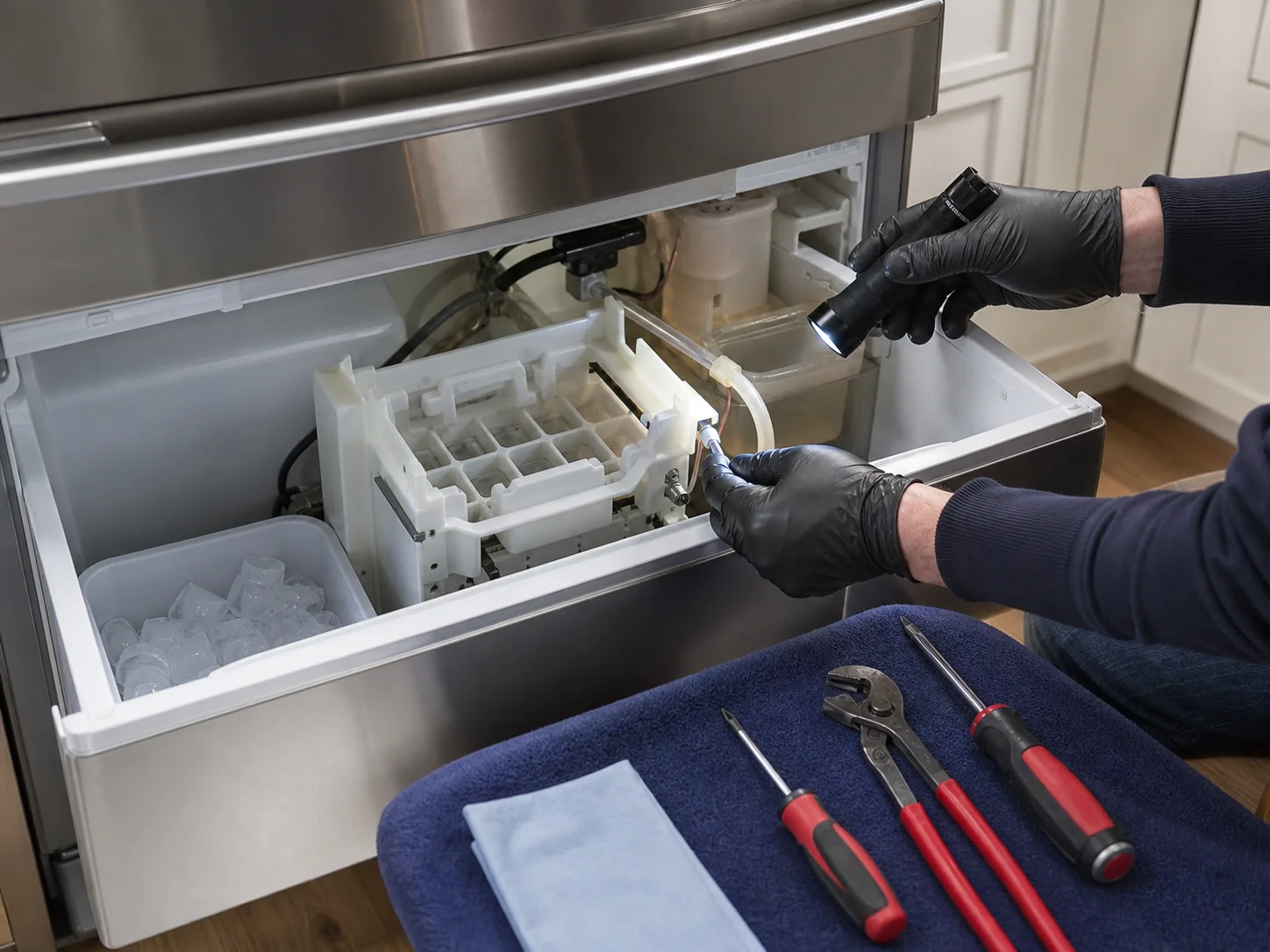
Gaggenau vs Miele vs Wolf is a choice among 3 design philosophies: Wolf builds heavy, pro-style American cooking equipment, Miele builds electronics-led German appliances for the whole kitchen, and Gaggenau builds modular, design-first German built-ins at the top of the luxury tier. All 3 brands cook well, so the right pick for a Sunnyvale kitchen depends on 4 things: how you cook, which refrigerator the cooking gear sits beside, how much electronics you want, and who can service it nearby.
This side-by-side draws on 16 years of diagnosing built-in kitchens, most of them built around Sub-Zero refrigeration and Wolf cooking equipment. The comparison stays on the owner's side of the decision: how each brand is built, what its cooking and cooling designs favor, which parts tend to wear, and how parts and service get to a South Bay home.
How is each brand put together?
Wolf ranges and rangetops use heavy stainless steel bodies, continuous cast-iron grates and sealed burners, finished on many models with the signature red knobs. Wolf belongs to the privately held Sub-Zero Group, headquartered in Madison, Wisconsin, alongside Sub-Zero refrigeration and Cove dishwashers. The Wolf design puts mass and mechanical simplicity on the cooktop and concentrates the electronics in the ovens.
Miele, a family-owned German company founded in 1899, builds ranges, wall ovens, combi-steam ovens, speed ovens and induction cooktops with a strong emphasis on electronic controls and precise panel fit. Miele says it tests its appliances for a 20-year service life.
Gaggenau, part of the Bosch-owned BSH group that also includes Thermador, concentrates on modular built-ins: 200 and 400 series wall ovens, combi-steam ovens and Vario cooktop modules that sit side by side in the counter. Gaggenau construction is sculptural and minimal, and the Gaggenau 400 series ovens open on a side-hinged door instead of dropping down.
What does each cooking design favor?
Wolf gas cooktops are built around dual-stacked sealed burners: the upper tier delivers searing heat for woks and steaks, while the lower tier holds a gentle simmer for sauces. Wolf rangetops and ranges can add an infrared charbroiler, a griddle or a French top, and Wolf dual-fuel and M series ovens use dual convection for even multi-rack baking.
Miele cooking appliances favor guided precision. Miele ovens carry automatic programs that set mode, temperature and time for a chosen dish, and Miele combi-steam ovens blend convection heat with moisture for bread, roasts and reheating.
Gaggenau cooking design favors flexibility and a fully built-in look. Gaggenau Vario modules let an owner assemble a cooktop from a gas wok burner, a Teppan Yaki plate, induction zones and grill elements, and the Gaggenau 400 series combi-steam ovens can connect directly to a water line and drain instead of a refillable tank.
Where does Sub-Zero cooling fit against Miele and Gaggenau?
Wolf builds no refrigerators, so the cooling half of a Wolf kitchen usually comes from its sister brand, Sub-Zero. Many Sub-Zero built-ins use dual refrigeration, with separate compressors and evaporators for the fresh-food and freezer sides. That Sub-Zero layout keeps dry freezer air away from produce and stops odors moving between compartments. Sub-Zero suggests 38°F for fresh food and 0°F for the freezer as starting set points.
Miele and Gaggenau lean on column refrigeration: separate refrigerator, freezer and wine columns, each with its own cooling system, installed side by side behind custom panels. Miele sold its columns for years under the MasterCool name, and Gaggenau calls its line Vario cooling.
For upkeep, a Sub-Zero built-in places its condenser behind a front grille an owner can brush and vacuum, while Miele and Gaggenau columns depend on an unobstructed toe-kick or top ventilation path. Any built-in refrigerator runs warm when that airflow path clogs with dust.
Is one of the three clearly more reliable?
No independent long-term failure data covers all three brands under the same conditions, so most online reliability rankings rest on anecdote. A diagnostics specialist sees something more useful: repeating wear points. On Wolf gas and dual-fuel ranges, the usual parts are spark igniters and spark modules, oven temperature sensors, convection fan motors and door hinges, plus control boards on newer electronic models.
Miele and Gaggenau ovens place more of their function in electronics, so service on those brands more often involves touch-control panels, sensors and door-lock assemblies on self-cleaning ovens. Combi-steam ovens from all three brands add water-handling parts, such as pumps and steam generators, that suffer when mineral scale builds up.
Installation decides more reliability outcomes than badges do. An undersized hood that traps heat and grease, a shared or undersized circuit on a dual-fuel or induction appliance, and an unlevel cutout shorten the life of any premium oven or cooktop.
How do service and parts reach a Sunnyvale kitchen?
Wolf parts move through the Sub-Zero Group's US distribution, and Wolf equipment is common enough in Santa Clara County kitchens that many independent technicians know the line well. For Sub-Zero or Wolf work in Sunnyvale, diagnosis starts at $145-$225, and the $225 diagnostic fee is credited toward the repair when you go ahead.
Miele runs its own service organization in many US metro areas, so a Miele oven or cooktop repair often goes through Miele directly. Gaggenau service follows BSH channels, the same network that supports Thermador. Parts for European-built appliances sometimes ship from overseas, which can stretch a repair timeline.
Santa Clara Valley water is mineral-heavy, so a Wolf, Miele or Gaggenau steam oven in Sunnyvale needs descaling whenever its control prompts.
Should you mix brands in one kitchen?
Mixing brands works well as long as each appliance gets the cutout, power and ventilation its installation guide specifies. Many Sunnyvale remodels pair a Sub-Zero refrigerator with a Wolf range and a Cove dishwasher to keep one service family; others combine a Wolf rangetop with a European combi-steam wall oven.
In Sunnyvale's Eichler and ranch homes, the house often narrows the choice before the brand does. The hood duct route through a low-slope roof and the spare capacity in the electrical panel can decide between a 36-inch gas range and an induction or dual-fuel model.
A short checklist settles most Gaggenau, Miele and Wolf debates: cook on each brand at a showroom, confirm who services that brand locally, check the hood and electrical plan, and compare parts and labor warranty terms.
FAQ
Questions & answers
Is Gaggenau better than Wolf?
Neither brand is better across the board. Gaggenau suits owners who want modular, design-first built-ins and plumbed steam cooking, while Wolf suits owners who cook hard on gas and want a heavy, mechanically simple range. Your refrigerator pairing and local service access should break the tie.
Does Wolf make refrigerators or dishwashers?
No, Wolf makes cooking equipment only. Sister brand Sub-Zero builds the refrigerators and Cove builds the dishwashers, all inside the Sub-Zero Group, so a Wolf kitchen usually pairs with those two lines rather than with a Wolf-badged refrigerator.
Who owns Gaggenau, Miele and Wolf?
Gaggenau belongs to BSH, the Bosch-owned group that also owns Thermador. Miele is a family-owned German company founded in 1899. Wolf belongs to the privately held Sub-Zero Group in Madison, Wisconsin. If it needs a pro, Sunnyvale Sub-Zero Repair is at (669) 336-6357.
How often should a steam oven be descaled in Sunnyvale?
Descale whenever the steam oven's control asks, and do not postpone the prompt. Santa Clara Valley's mineral-heavy water brings that prompt sooner on Wolf, Miele and Gaggenau steam ovens alike, and the descaler named in the manual protects the steam generator.
Go deeper
More Sunnyvale guides
Frost Buildup on 15-to-20-Year-Old Sub-Zero Built-Ins in Sunnyvale
Frost on your Sunnyvale Sub-Zero freezer wall? Learn when it signals a defrost heater, thermostat, or drain fault versus a tired door gasket.
Read the guide → Over-Cooling Fix · 7 minSub-Zero Freezing Fresh Food in Sunnyvale: Why It's Too Cold
Sub-Zero freezing food in the fresh-food section in Sunnyvale? Learn why it over-cools, the thermistor and damper causes, and when to book a repair.
Read the guide → Sub-Zero guide · 5 minWhy a Sub-Zero wine column drifts warm in Sunnyvale
Sub-Zero built-in wine storage runs two zones at once, and the first sign of trouble is a few degrees of drift. What goes wrong in Sunnyvale kitchens and how it's diagnosed.
Read the guide →Rather leave it to a specialist?
Have the failing compartment and model number ready, and you will get a clear first opinion — not a sales pitch.
| Wolf's sister brands | Sub-Zero refrigeration and Cove dishwashers, all in the Sub-Zero Group |
|---|---|
| Typical Wolf wear parts | Spark igniters, oven temperature sensors, convection fan motors and door hinges |
| Sub-Zero starting set points | 38°F fresh food, 0°F freezer |
| Diagnostic fee | $225, credited toward the repair |
| Local help | Sunnyvale Sub-Zero Repair — (669) 336-6357 |
Book this repair: Sub-Zero Parts and Warranty Notes for Sunnyvale Service · Sub-Zero Maintenance Calendar for Sunnyvale Homes